Ten Tiers, Four Divisions Each
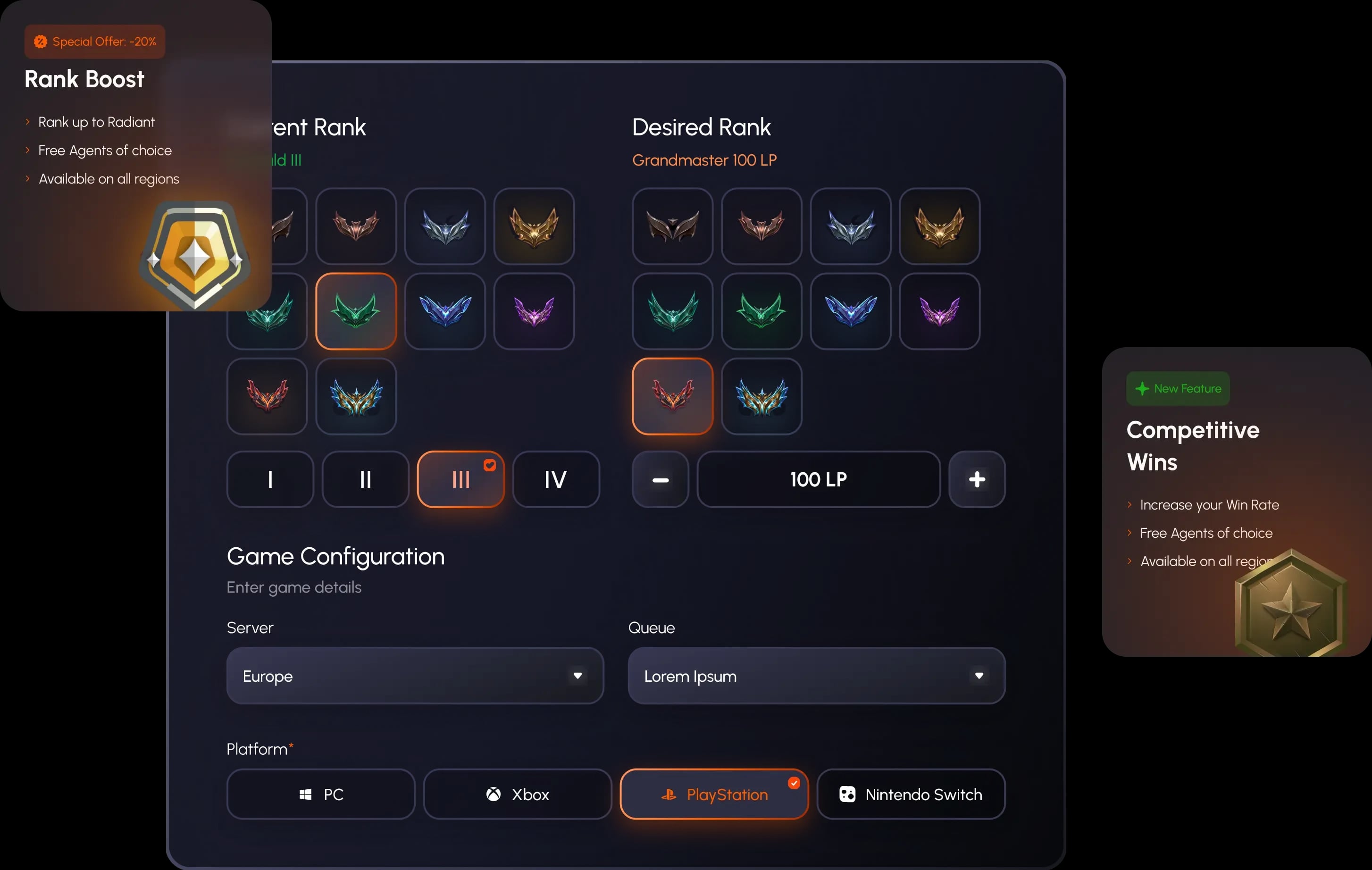
Iron, Bronze, Silver, Gold, Platinum, Emerald, Diamond, Master, Grandmaster, Challenger.
The lower seven carry four divisions each, running IV up to I. Master, Grandmaster and Challenger have no divisions — they're a single LP pool.
Emerald sits between Platinum and Diamond, exactly as it does on the League ladder, and it still catches returning players out.
LP Comes From Placement, Not From Winning
This is the fundamental difference between TFT and every other game on this site, and it shapes every service here.
You don't win or lose a TFT game. You finish somewhere between 1st and 8th. Top four gains LP, bottom four loses it, and the amount scales with how high or low you placed.
That has a real strategic consequence: consistency beats spikes. A player who reliably finishes 2nd to 4th climbs faster than one who alternates 1sts and 8ths, because the losses cancel the wins. Good TFT boosting is about eliminating the bottom-four finishes, not about forcing firsts.
It's also why our win boosting page prices first-place finishes specifically rather than selling you "wins" in a vague sense — in TFT those are two different products.
The Full Ladder Reset
Every set rollover triggers a complete reset. All players are repositioned between Iron II and Silver IV based on their previous set's finish.
There's no partial protection, no soft landing for high ranks, and no carry-over of visible rank. A Challenger and a Platinum player restart within a couple of divisions of each other.
What does carry is your hidden MMR, which is why two accounts placed in the same division can climb at very different rates — and why we check it before quoting rather than pricing purely off the tier gap.
Provisionals Are the Most Forgiving Games of the Set
After each reset you play five provisional matches, and they're deliberately generous:
A bottom-four finish costs you no LP. A top-four finish awards extra LP.
That's an advantage-only phase — the floor is fixed and the ceiling is raised. There is genuinely no downside scenario across those five games, which makes them the best-value block in a TFT set and the single most commonly wasted opportunity.
Placement matches covers them properly.
Master and Above Works Differently
Once you reach Master the division structure disappears and it becomes a raw LP pool.
Grandmaster requires at least 200 LP in Master. Challenger requires at least 500 LP in Grandmaster. These are competitive thresholds against the rest of your region, not fixed gates.
There's also a queue restriction worth knowing: Master and above can only queue with one other player within 400 LP of them. If you're buying a climb in order to play Double Up with a friend at high rank, that window decides what's actually possible.
Double Up and Hyper Roll Are Separate Ladders
Double Up is the two-player queue and it runs the same metallic tier structure as standard ranked — Iron through Challenger with four divisions — and the same reset mechanics at every set rollover. It's a genuinely separate rating from your solo rank, which means it's a separate climb and a separate order. Double Up boosting covers it.
Hyper Roll uses a different, colour-based progression through Blue, Purple and Hyper tiers rather than the metallic ladder. It's not covered by a dedicated page here, so Hyper Roll targets go through the custom offer form.
Hidden MMR Is the Thing That Survives
One last mechanic, and it explains a lot of otherwise confusing outcomes.
Visible rank wipes at every rollover. Hidden MMR carries over. Which is why two players both placed in Bronze III after a reset climb at completely different speeds — one is being matched and rewarded as the Diamond player they were last set, the other as the Silver player they were.
It's the single biggest reason we check your account before quoting rather than pricing off the tier gap alone.